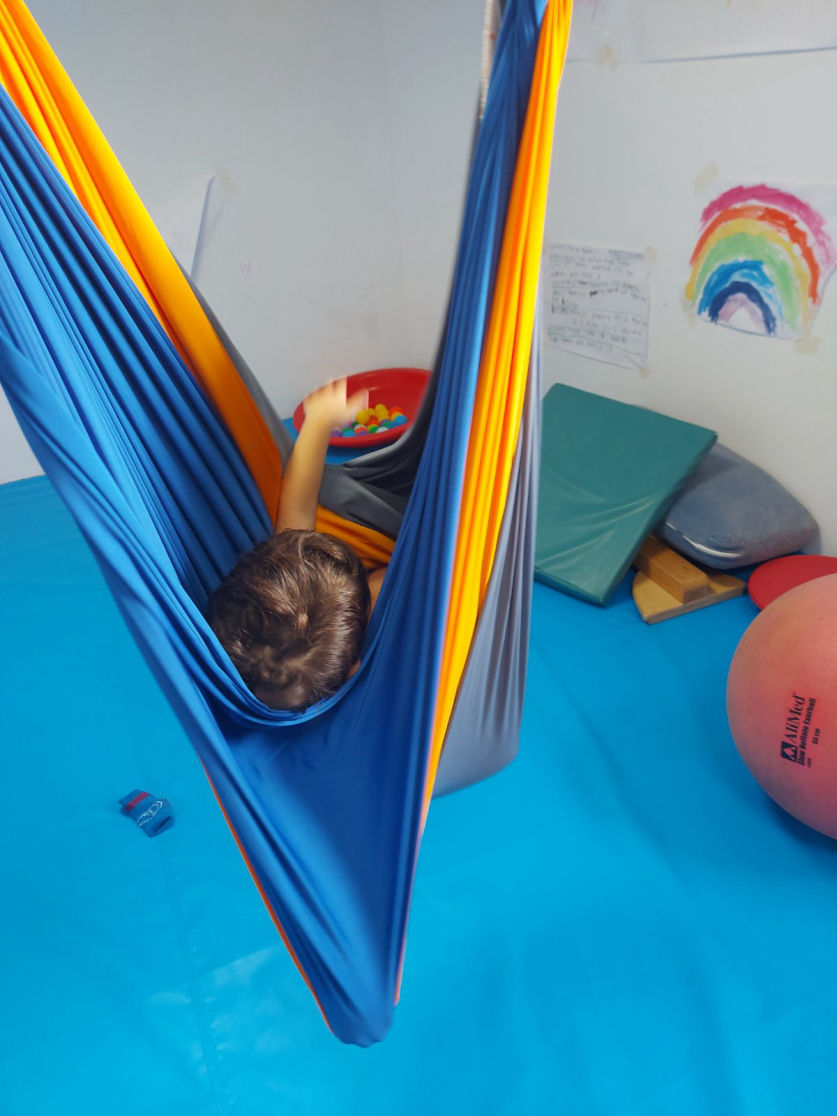
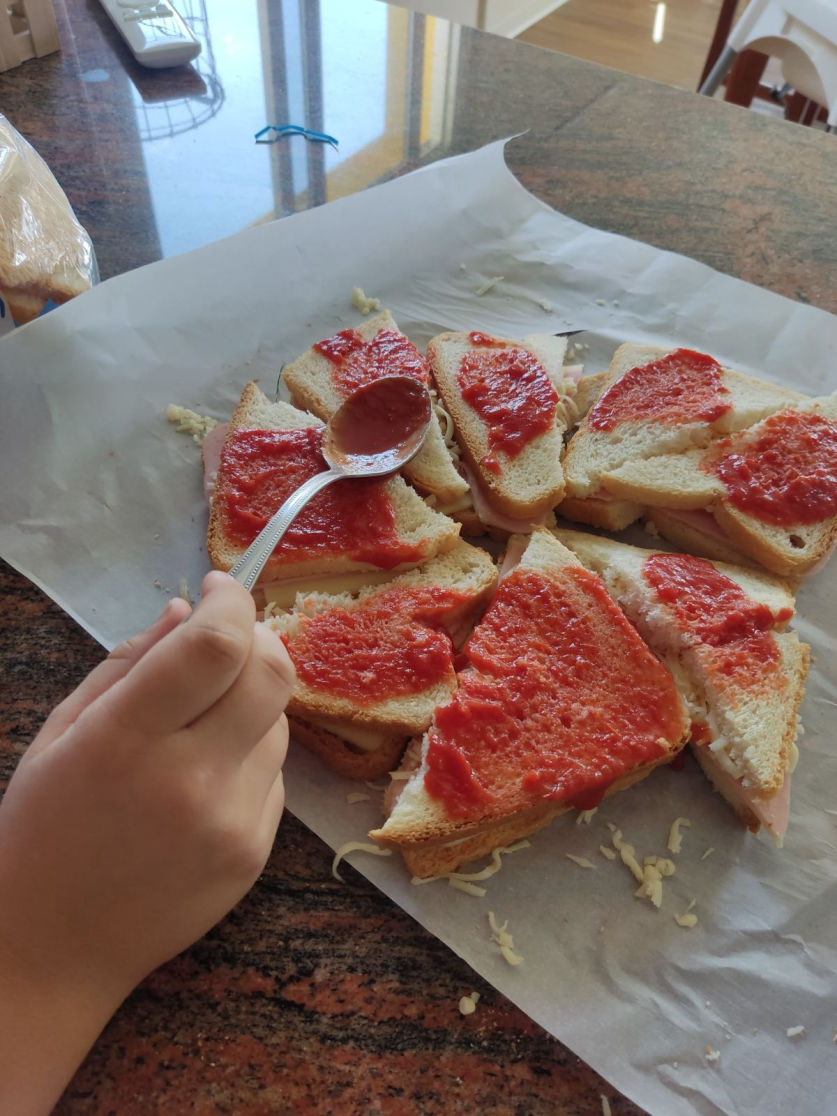
At OT Land, occupational therapy looks a lot like play. Children get the ability to be regulated, structured in their bodies, generate ideas and plans for action, solve problems, and form relationships through therapeutic play. A child needs all of these abilities to succeed at home and at school. The sensory gym provides the ideal environment for children to develop motor confidence, body scheme, impulse control, goal-directed activities, and social success via playful interactions with therapists, and other kids.
Your child's occupational therapist focuses on arousal management, motor and process skill development, and assisting your child in achieving "just-right success" while they are playing.
The entire family is supported when a kid attends OT Land, and the parents receive training to help them understand the therapeutic principles that promote their child's health and wellbeing.
Sensory integration, regulation, and relationships are the three interconnected health foundations that are the emphasis of therapy at the OT Land.
The goals of therapy are to improve self-worth, social competence, and the development of happy homes and educational environments. Therapy typically includes techniques for modulating and differentiating sensations as well as improved postural control and motor planning as necessary, all while utilizing a sensory integration approach. We also take into account the priorities set by parents for modifications to everyday functioning at home, school, and/or in the social community. Enhancing parent-child connections and pleasure in living, are constant goals.
The purpose of occupational therapy is to give kids the confidence and skills they need to successfully engage in their home and school lives.
Through the use of appropriate motor and behavioral responses, sensory integration treatment attempts to help children with sensory problems appropriately detect, regulate, and interpret sensations. This will allow them to carry out daily activities in a useful way.
For kids, the emphasis is on play: playing with family, playing with siblings, and playing with friends; succeeding in school; successfully accomplishing everyday tasks like eating, dressing, and sleeping; and living a happy, healthy family life. Parents are given advice on how to help their child go through the ups and downs of life so that they can share a happier life.
The occupational therapists at OT Land help you understand how your kid experiences sensation and how that perception affects his or her ability to pay attention, interact socially and emotionally, use motor skills, and learn. While you actively participate in every session and learn beneficial practices for the home, school, and community during your child's OT sessions, your occupational therapist serves as a coach, educator, and role model.
Therapy sessions are enjoyable and gently designed such that your child is always successful in completing each exercise while still being challenged. The focus is on helping kids interact in a sizable occupational therapy room full with hanging equipment including nets, ropes, swings, and other sensory apparatus in order to create instinctive and appropriate reactions to sensation in an active, meaningful, and enjoyable way.
Step 1: Give us a call or fill in the contact form below. We will call you and arrange a face to face meeting or if you prefer an online meeting to discuss your concerns. Have in mind this is at no cost and have no obligation to enroll your child.
A baby, child, or adolescent who doesn't eat well might cause worry, frustration, perplexity, and occasionally even medical concerns. At OT Land Feeding Program, we are aware of how challenging it may be to raise a kid who is undernourished. We specialize at identifying and treating all causes of infants' and kids' refusal to eat. Our main goal is to assist your efforts as parents as you instruct your kids to eat a variety of healthy foods to promote their optimum development.
The SOS Approach to Feeding program, a nationally and globally renowned method for evaluating and treating kids with feeding challenges, is used at OT Land Feeding Program. The SOS Approach to Feeding was created by Dr. Kay Toomey.
Sometimes, as parents, we are aware that our infant, or child is having trouble swallowing. But frequently, we are told to wait till our kids are older because "all kids are picky" and "all kids outgrow their pickiness." Actually, neither of these claims is accurate. According to the research, 20% of all kids between the ages of birth and 5 or 7 may struggle with a feeding issue at some point or another. The study also reveals that only roughly half of these kids will fully "grow out" of their feeding issues.
If you are already aware that your infant, child, or adolescent needs an assessment let us know.
Our mission as feeding therapists and food school teachers is to teach infants and kids healthier eating habits. However, adults are also enrolled in "The Food Program". Each Meal Session includes participation from parents enrolled in our program.
A play-based curriculum called The SOS Approach to Feeding teaches kids how to eat at a speed that respects their readiness to advance through learning the 32 different phases required in the task of eating. We use the natural, social reinforcement of playing with food to teach the kids the skills they need to eat a range of food varieties and textures.
The SOS Approach to Feeding helps babies eat and grow well by utilizing social interaction with parents and developmental strategies for newborns and toddlers.
Infant Feeding Therapy
Together, you and your feeding therapist will feed your child. Any issues with breast or bottle feeding, the introduction of spoon feeding, the switch to solid foods, and cup drinking will all be assisted by the therapist. Because feeding is a skill that develops between the ages of birth and three, early intervention to treat feeding difficulties is crucial. Infants under 12 months of age will be scheduled within two weeks.
Child Feeding Therapy
Your feeding therapist will choose and prepare foods, as well as offer plates, cups, cutlery, etc., for your therapy meals with your child. Play-based sessions are created to fulfill medical, sensory, sensory-motor, oral motor, and other needs. You'll discover the ideal ways to assist your kid in achieving their feeding objectives.
Group Feeding Therapy
In our kitchen, a small group of 2-3 kids engages in a therapy meal. Based on the needs of the therapy, groups are set up for kids as young as 18 months and as old as 7 years. Parents actively participate by assisting their kid with a sensory play routine at the start of the therapy session. Parents receive instruction on how to help their child eat while watching the feeding therapists work with their child.
Finding the cause of a child's poor eating or growth is really challenging. Humans actually employ seven separate systems for eating and feeding, so we need to start with an evaluation that considers your child as a whole person rather than just their mouth, gut, or behavior. We are all devoted to working with you and your child to figure out what is preventing them from eating well and how to fix it.
Sign up in 1 minute